Cesta Roman Explained: Ancient Roman Road System
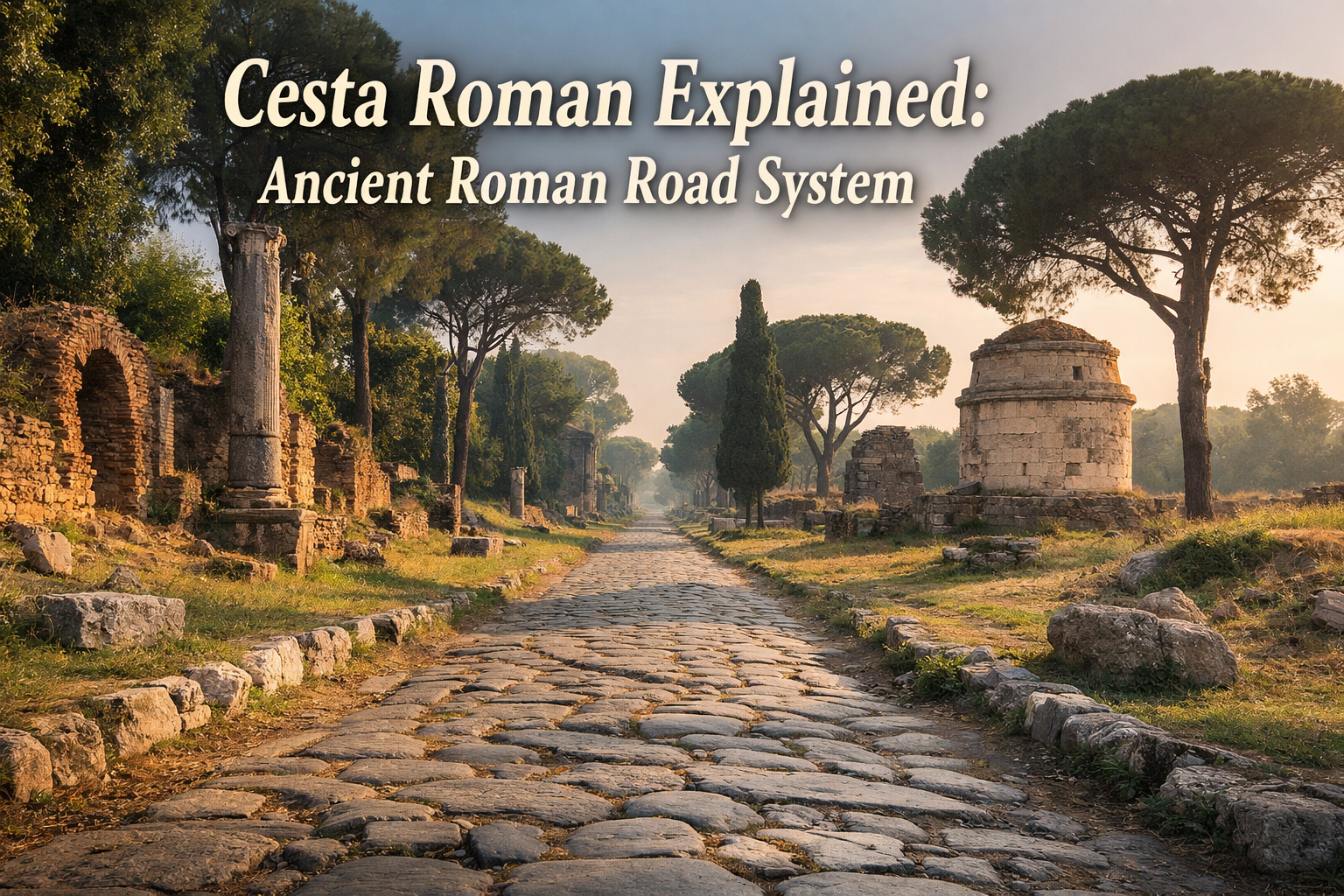
Cesta Roman refers to the network of ancient roads built by the Roman Empire to connect cities, military bases, and provinces across large parts of Europe, North Africa, and the Middle East. The phrase combines the word cesta, meaning road or route in several European languages, with Roman, referring to the civilization that created these roads.
Roman roads were carefully engineered using layered stone construction, proper drainage, and straight routes. These roads allowed armies to move quickly, helped merchants transport goods, and made communication across the empire easier. Because of their strong design, many Roman roads still exist today and continue to influence modern transportation systems.
What Does Cesta Roman Mean?
The term Cesta Roman is often used to describe Roman roads or the Roman road network.
The word cesta means road, route, or path in several Slavic languages such as Slovenian and Czech. When combined with Roman, it refers to the ancient transportation system developed by the Roman civilization.
In ancient Rome, roads were called viae in Latin.
Today, historians and travelers sometimes use the term Cesta Roman to refer to:
- Ancient Roman roads
- Roman transportation routes
- Historical road systems created during the Roman Empire
In simple words, it represents the road network that helped connect the Roman world.
The Purpose of Roman Roads
Roman roads were not built only for travel. They served several important purposes that helped Rome manage a very large empire.
Military movement
Roman armies needed reliable routes to travel across the empire.
Straight and well built roads allowed soldiers to move quickly between cities and borders. This helped Rome respond to threats and control distant regions.
Trade and economic growth
Roman roads also supported commerce.
Merchants used these routes to transport goods such as:
- Olive oil
- Wine
- Grain
- Textiles
- Pottery
These trade networks helped connect regional economies and encouraged business between different parts of the empire.
Government communication
The Roman government depended on fast communication.
Officials used the roads to send messages, deliver laws, collect taxes, and manage distant provinces. The road system made it easier for Rome to maintain control over a large territory.
How Roman Roads Were Built
Roman engineers used advanced construction methods for their time. Their careful design allowed many roads to last for centuries.
Layered construction system
Most Roman roads had several layers that made them strong and durable.
| Layer | Description |
|---|---|
| Foundation | Large stones created a stable base |
| Middle layer | Crushed stones and gravel added strength |
| Upper layer | Smaller stones or sand created a smooth surface |
| Pavement | Flat stones formed the top road surface |
This layered design helped the road carry heavy traffic without sinking.
Drainage design
Roman engineers understood the importance of water control.
They built roads with a slightly raised center so rainwater could flow to the sides. Drainage ditches helped remove water and protect the road from damage.
Straight road planning
Roman surveyors tried to build roads as straight as possible.
When they faced hills, rivers, or valleys, they built bridges or tunnels instead of changing direction. This approach allowed faster travel and easier navigation.
Famous Roman Roads
Several Roman roads became well known because of their importance.
Via Appia
The Via Appia was one of the earliest and most famous Roman roads. It connected Rome with southern Italy and later reached the port city of Brindisi.
Because of its importance, people often called it the Queen of Roads.
Via Aurelia
The Via Aurelia followed the western coast of Italy and connected Rome with important coastal regions.
Via Flaminia
This road linked Rome with northern Italy and served as a key route for trade and military movement.
Via Egnatia
The Via Egnatia crossed the Balkan Peninsula and connected the Adriatic Sea with Byzantium, which later became Constantinople.
These roads formed the core of the Roman transportation system.
The Size of the Roman Road Network
At the height of the Roman Empire, the road system stretched across three continents.
Historians estimate that the Roman road network covered more than 400,000 kilometers, including main roads and smaller regional routes.
These roads connected important cities such as:
- Rome
- Londinium (modern London)
- Carthage
- Antioch
- Alexandria
Because of this network, travelers could move between distant regions with surprising efficiency.
Cultural Influence of Roman Roads
Roman roads shaped the ancient world in many ways.
Spread of language and culture
Travelers carried ideas and traditions along these routes.
Roman roads helped spread:
- Latin language
- Roman law
- Architecture
- Religious beliefs
This process helped integrate many different regions into the Roman cultural system.
Development of towns and cities
Many towns developed along Roman roads.
Travelers needed places to rest, repair equipment, and buy supplies. Inns, markets, and service centers often appeared along the routes.
Over time, some of these small settlements grew into major cities.
Roman Roads in Modern Europe
Many modern roads in Europe still follow ancient Roman routes.
Engineers often built new highways on the same paths because Roman planners had already chosen efficient routes through landscapes.
In several countries, visitors can still see preserved Roman roads. Some sections show original stone surfaces and wheel marks from ancient carts.
These remains provide valuable insight into ancient engineering and travel.
Why Roman Roads Still Matter Today
Roman roads are more than historical structures. They represent a major achievement in engineering and organization.
Historians study these roads to understand:
- Ancient trade networks
- Military strategy
- Travel and communication
- Urban development
Engineers also study Roman construction methods because many of these roads lasted for more than two thousand years.
Their durability shows the effectiveness of Roman design and planning.
Conclusion
Cesta Roman represents one of the most important achievements of the Roman civilization. The Roman road system connected cities, supported trade, and allowed the empire to function across vast distances.
These roads helped move armies, goods, and ideas. They supported economic growth and cultural exchange across regions that were far apart.
Even today, the influence of Roman roads remains visible. Many modern highways follow the same routes first planned by Roman engineers thousands of years ago.
The story of Cesta Roman reminds us that strong infrastructure can shape history. Roads do not only connect places. They connect people, cultures, and civilizations.
Stay informed with the latest expert insights into the Parker Story today.